Miami Carnival did not appear out of nowhere. It is the local expression of traditions built across the Caribbean over generations: Trinidad's costumed street parades, the Bahamas' Junkanoo, Barbados' Crop Over, and the soca and steelpan music that tie them together. Each one answers the same question in a different way — how a community turns history, music and craft into a public celebration.
Those traditions do not switch off when the parade season ends. In a county where a large share of residents trace family lines to the Caribbean, the costumes, the music and the food keep working all year: in dance classes, in mas camps where costumes are built by hand, in cookshops and community halls from Little Haiti to Lauderhill's edge. This guide explains where each tradition comes from and what to look for locally, in any season.
What is a Caribbean carnival, at its root?
A Caribbean carnival is a street festival built around costumed bands, music and dance, usually tied to a calendar moment — before Lent in the Catholic islands, at harvest or emancipation time elsewhere. Its roots run through plantation-era history: enslaved and free Black communities took permitted celebration days and filled them with their own music, masks and satire. Over time those celebrations grew into the large organized events known today. For related coverage, see Little Havana's Tower Theater, Dark Since the City Took Over, Is Headed Back to Miami Dade College.
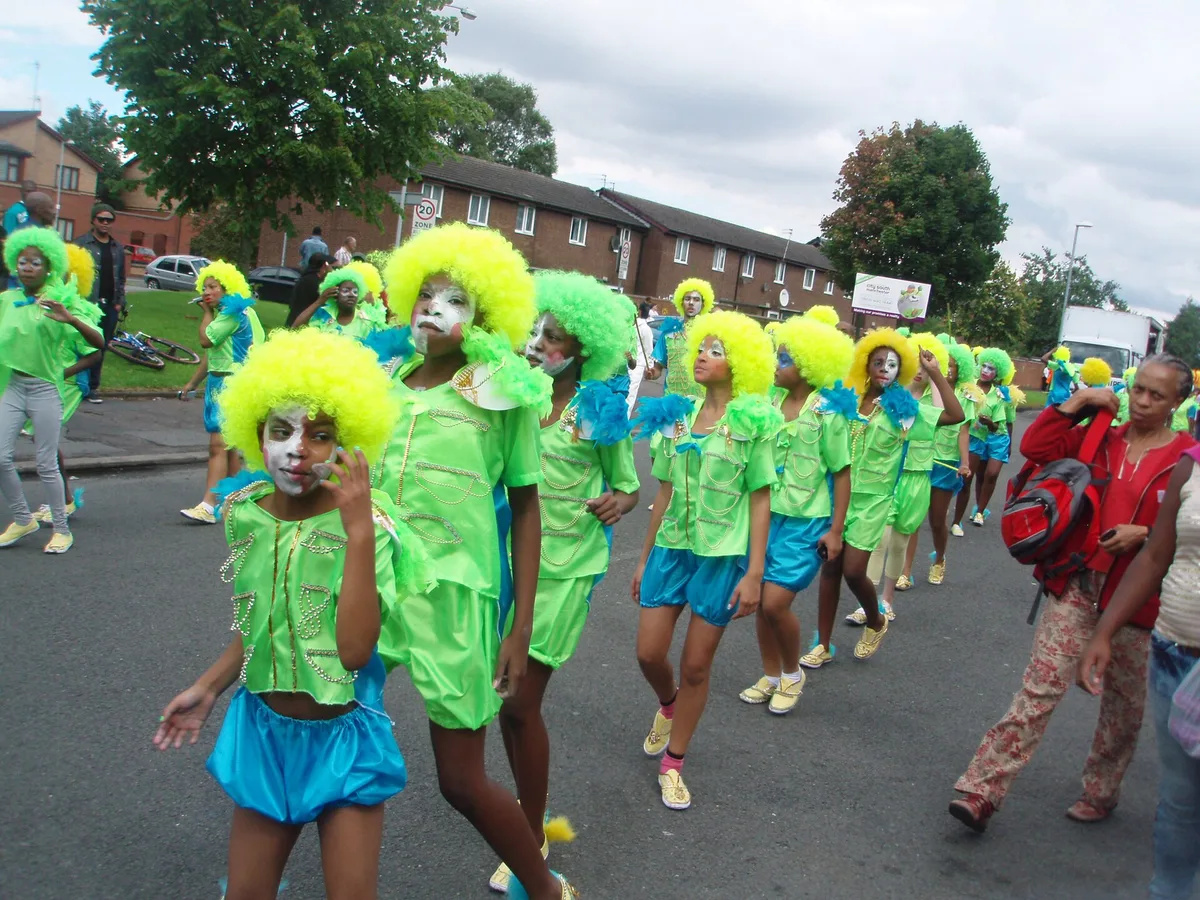
The core elements repeat across islands. There is a mas — short for masquerade — meaning bands of dancers in themed costumes, often feathered and beaded, built around a chosen theme for the year. There is a road march, the song the crowds play most. And there is a panel of judges, because carnival is a competition as much as a party. Miami's version keeps all three: bands, costumes, a judged parade and a season of competing songs.
How did Trinidad's mas shape the modern carnival?
Trinidad and Tobago gave the region its carnival template. The country's pre-Lent festival evolved from masked street processions into the modern mas: themed bands designed months in advance, a parade route, and calypso and soca competitions that crown a road-march winner each year. Steelpan — the metal-drum instrument invented in Trinidad in the twentieth century — grew up alongside it and now anchors carnival music worldwide.
Two ideas from Trinidad matter most for understanding Miami. First, the costume is engineered, not bought off a shelf: a mas band's designers sketch, wire and glue a theme into being over many months, and the big costumes are carried on wheels because a person cannot bear them alone. Second, the music is competitive. Soca artists release new songs specifically for the season, and the crowd decides what wins. Both ideas transferred directly to Miami's bands, which build and rehearse locally all year.
What makes Junkanoo different from carnival?
Junkanoo is the Bahamas' contribution, and it looks and sounds nothing like a Trinidad-style parade. It runs through the night in downtown Nassau, with groups dancing in ordered lines behind drummers, cowbell players and brass. The costumes are the tell: Junkanoo builds from colored crepe paper pasted onto cardboard frames, so the costumes rustle and shed as they move. The rhythm is goombay — drums and bells — and it is fast, loud and relentless.
Junkanoo is a competition between named groups, judged on costume, music and choreography, and the groups rehearse in dedicated shacks for months. In South Florida, that structure shows up in Bahamian-American community groups that keep the dance forms and the crepe-paper craft alive between seasons, teaching younger members the line work and the bell patterns. When a Junkanoo group performs at a local festival, the giveaway is the sound: if the percussion is drums and cowbells rather than a DJ and a soca track, the roots are in Nassau, not Port of Spain.
Where does Crop Over fit in?
Crop Over is Barbados' festival, and its origin is different in kind. It began as a celebration marking the end of the sugar cane harvest — the crop over — before fading and later being revived as a national summer festival. That harvest origin gives it a different texture: it runs for weeks rather than a single parade day, and its music, including the local soca offshoot called power soca and the slower groovy soca, is built for a long season rather than one road march.
For Miami, Crop Over matters because it extends the calendar. When the pre-Lent carnivals finish, the Bajan season is just warming up, and Bajan-American communities here follow it closely. The practical effect for a local reader is simple: Caribbean festival music and costume culture in South Florida are not a single annual event. Different islands peak at different times, so something is always in season somewhere.
Where do these traditions show up in Miami year-round?
The clearest year-round home is the mas camp. Bands that field costumes for the big parade rent warehouse and yard space in Miami-Dade, and much of the year they are working sites: welding frames, gluing feathers, fitting costumes on paying band members. Some camps open their doors for fundraisers and parties, which is the closest thing carnival culture has to a backstage pass. Ask a band when it starts building and the honest answer is usually: right after the last one ends.
The music keeps a calendar too. Soca and dancehall nights run in clubs and event halls across the county in every season, and steelpan — the Trinidadian invention — is taught in school and community programs, so the instrument turns up at everything from library events to waterfront festivals. Caribbean food is the everyday layer: bake and shark, doubles, curry goat, conch salad and Bajan fish cuts appear at cookshops and weekend festivals long before any parade. As the Miami tourism guide notes, the county's neighborhoods carry a distinctly Caribbean feel, from the palm-lined shore of Key Biscayne's Crandon Park to the music spilling out of open doorways in Little Havana — and that same texture extends to the festival calendar.
What this means for a reader: treat carnival as a culture with an off-season, not an event with one. If the parade is months away, the traditions are still findable — in a mas camp's open yard, a steelpan class, a soca night or a cookshop counter. The costume you see in October was being glued together in a Miami warehouse in February.
How can a newcomer experience carnival culture before the parade?
Start with the community layer rather than the headline event. Community organizations across Miami-Dade host dance classes, costume workshops and smaller street festivals through the year, and these are where the traditions are actually passed on. County and city event calendars list many of them; checking a local events listing is a reasonable first step. Museums help with the history: a visit to a cultural institution downtown, or the county's public art and heritage sites, often surfaces Caribbean diaspora stories in context. This connects to our earlier piece, Miami-Dade's Public Art Collection: Where Nearly 1,000 Free Works Live Across the County.
A few practical notes. Smaller community events are usually free or low-cost, while the main carnival weekend events ticket separately, so check each organizer's page — details change year to year, so confirm dates and venues with the organizer before going. Wear shoes you can stand in for hours, bring water, and expect sound systems at full volume near the stage. And if someone offers you a taste of doubles or a plate of bake and saltfish, take it. The food is not a side attraction. It is half the tradition.
The takeaway: one region, many carnivals
The evidence points one way: Miami's carnival culture is a composite, not a copy. Trinidad supplied the mas and the soca competition. The Bahamas supplied Junkanoo's drums, bells and crepe paper. Barbados supplied a harvest-rooted summer season. Miami, with its deep Caribbean-American population, gave all of them a permanent address.
What remains unknown is only the next chapter: which bands, which songs and which costumes will define an upcoming season. That answer is built in the mas camps now, by hand, months before any parade route is announced. For readers who want the wider picture of the county's cultural institutions and neighborhood traditions, the publication's culture coverage follows them year-round.