Most Miami residents who want to volunteer do not lack goodwill. They lack a shift that survives a commute on I-95, a rotating work schedule and a family calendar. The good news is that volunteering no longer means committing to every Saturday for a year. Organizations now list single-day roles, remote roles and hybrid roles, and the fit between the role and the schedule matters more than the cause on the letterhead.
This guide sorts the common types of volunteer opportunities in Miami into three shapes: the one-off shift, the recurring commitment and the work-from-home role. It also covers the paperwork questions worth asking before signing up, because the fine print varies more than most people expect.
What kinds of volunteer roles fit a busy calendar?
Three shapes dominate. The first is the event shift: a few hours at a festival, a food distribution or a park cleanup, with no obligation beyond that day. The second is the recurring role, such as a weekly greeting desk or a monthly education presentation, which trades flexibility for depth. The third is the remote role, which removes the commute entirely.
Volunteer-matching platforms make the sorting easier. According to Idealist, its listings tag opportunities with labels such as on-site, hybrid, remote, training provided and done in a day, which lets a searcher filter for exactly the kind of time commitment a schedule can absorb. That tagging approach is the useful part, whichever city the listings cover: filter first by time shape, then by cause.
Event-style roles are a natural fit for Miami's calendar. The city runs a dense festival season, and large public events typically need short-shift help with setup, greeting and breakdown. Readers planning around the city's biggest gatherings can see the scale of that season in Miami Festivals Worth Planning Your Year Around, then look for single-day roles tied to the events they already plan to attend.
How do one-off event shifts work?
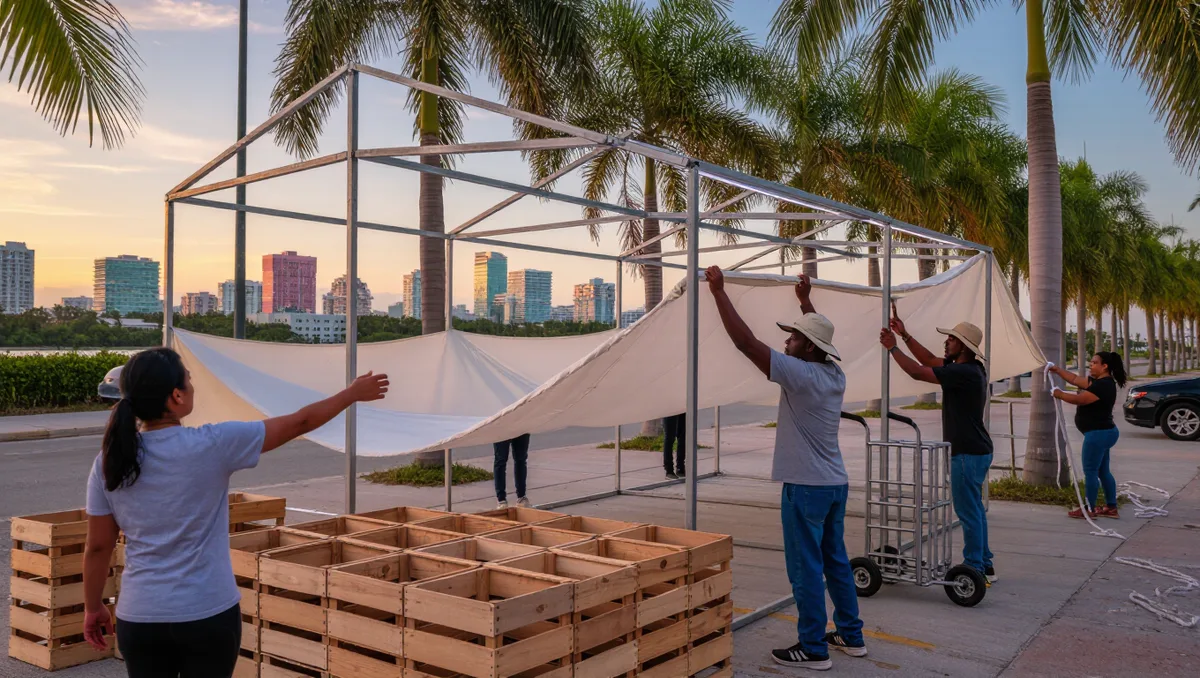
A one-off shift is the lowest-commitment entry point. The volunteer signs up for a named event, arrives at a set time, works a defined block and leaves with no further obligation. It suits people whose weeks swing: a nurse on rotating shifts, a restaurant worker, a parent whose free hours move with the school calendar.
The trade-off is that one-off roles often fill fast for popular events and require less training, so the work tends to be simple: directing foot traffic, handing out water, restocking tables. Treat the first shift as a test of the organization as much as the organization is testing the volunteer. A well-run shift has a clear check-in, a named supervisor and a defined end time.
Miami's street-festival calendar shows how this works in practice. Monthly events such as the one covered in Little Havana's Viernes Culturales recur often enough that a volunteer can try a single shift, skip a month and return without penalty. That rhythm, repeat without commitment, is what makes event volunteering durable for busy people. We covered a connected angle in Little Havana's Viernes Culturales Turns Calle Ocho Into a Monthly Street Festival.
When does a recurring role make sense?
Recurring roles suit people whose schedules are busy but predictable. A hospital volunteer desk, a weekly shelter shift or a monthly community-education slot all reward someone who can hold the same time slot week after week. The organizations that run these programs usually invest training in the volunteer, so they ask for that consistency in return.
Hospital programs are a clear example of the model. According to Confluence Health, its volunteer services program places people greeting visitors, assisting in patient care areas and supporting special projects, and it welcomes applicants of all backgrounds and skill levels. Hospital-style programs in any city tend to follow the same pattern: an application, an orientation and an agreed regular shift.
What this means for a Miami reader is simple. If the work week is steady, a recurring role delivers more skill and more relationships per hour. If the week is unpredictable, choose the one-off or remote shape instead, and do not let anyone guilt a bad fit into a long commitment.
Can volunteering be done from home?
Yes, and the remote category has grown well beyond envelope stuffing. Listings on platforms such as Idealist include remote roles such as dispatching volunteers by phone, casework that connects clients to recovery resources and fundraising support, some with training provided. A remote role erases the commute, which in Miami traffic can be the difference between a two-hour commitment and a four-hour one.
Hybrid roles split the difference: some work from home, some in person. They suit people who can occasionally travel to a site but not weekly. The practical step is to filter any volunteer database by the remote and hybrid tags first, then read only the listings that survive the filter.
What paperwork and rules should volunteers check first?
Two questions matter before signing anything. The first is what the application process requires. Municipal volunteer programs typically run through a formal application reviewed by staff. According to the City of Moses Lake, its volunteer opportunities are available as needed and approved by its Parks, Recreation & Cultural Services staff, with an application submitted for review before service begins. Expect a similar application-and-approval structure from city and county programs anywhere.
The second question is whether the hours count toward a legal requirement. This is where fine print bites. The same Moses Lake city page states plainly that hours served in its volunteer program cannot be applied toward legally or judicially required community service. Anyone volunteering to satisfy a court or school mandate should confirm, in writing, that the specific organization's hours will be accepted before committing a single shift.
A third check is the group fit. Some listings are tagged as good for groups, which matters for families, church groups and workplace teams that want to serve together. Others provide stipends or are restricted to certain professions, such as licensed mental health clinicians. Read the tags; they carry real conditions.
Our analysis: how to choose in one evening
Here is a grounded household example. A two-working-parent family in Kendall wants to volunteer but has one free weekend morning a month. The right role is not the food pantry's Tuesday night shift. It is the done-in-a-day event role, ideally one tagged good for groups, booked a month ahead. The family serves together once, the commitment ends when the event ends, and nobody resents a standing obligation they cannot keep.
The decision rules follow from that example. Filter by time shape before cause. Prefer one-off shifts when the schedule is unpredictable, recurring roles when it is steady, and remote roles when the commute is the bottleneck. Confirm the application process and, if hours must count toward an external requirement, get that confirmed before starting.
What to watch: volunteer listings change constantly, and posted opportunities reflect current organizational needs, not a standing menu. Check listings close to the week a person can actually serve, and expect details such as shift times and locations to be confirmed by the organizing group rather than assumed.
Volunteering in Miami works when the role matches the calendar, not the other way around. Start with one shift, judge the organization by how it runs that shift, and let the commitment grow only if the fit is real.