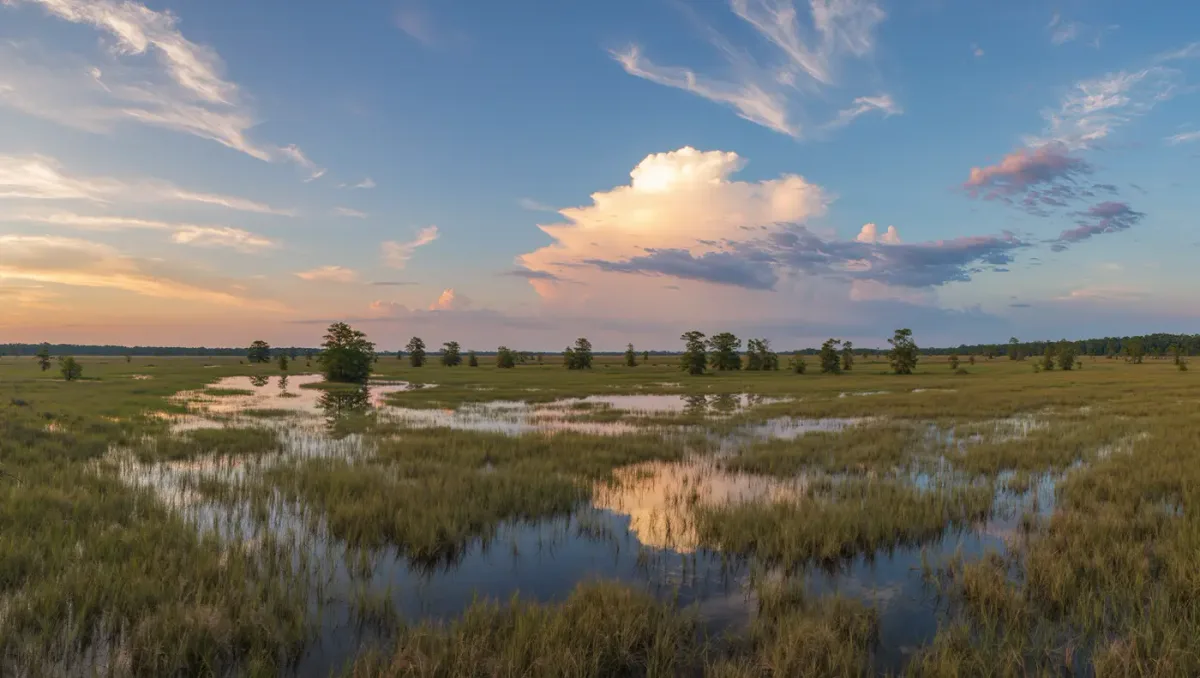
Governor Ron DeSantis announced on April 13 that the state had fully executed accelerated contracts with the U.S. Army Corps of Engineers for the Everglades Agricultural Area reservoir, pulling the project's completion forward by five years, from 2034 to 2029, per the governor's office. The 10,000-acre reservoir and its attached stormwater treatment area together cover roughly 17,000 acres south of Lake Okeechobee, per the South Florida Water Management District. State water managers describe the 2029 date as the working target for the project's completion.
The project is the centerpiece of Everglades restoration for a simple reason: it stores and cleans Lake Okeechobee discharges that now get dumped east and west during wet seasons. When the reservoir operates, water that would otherwise pulse through the Caloosahatchee to Fort Myers or the St. Lucie canal toward the Atlantic gets sent south, filtered through constructed wetlands, and recharged toward the aquifer that supplies Miami-Dade's drinking water. Full execution of the contracts means design and construction can proceed on the faster schedule without further interagency negotiation.
The announcement capped a funding run the governor's office tallies at nearly $8 billion for restoration and water quality since 2019, and it landed alongside federal help: Representative Mario Diaz-Balart applauded $461 million for Everglades restoration in the fiscal year 2026 Energy and Water appropriations bill, per the governor's release. The state's own fiscal 2026-27 budget recommendation, issued December 10, had proposed more than $810 million for the restoration program.
The reservoir is not a new idea. It descends from planning that began at the turn of the century under the joint federal-state restoration program, and it stalled for years over land acquisition, financing and interagency process. What changed with the April 13 execution is procedural: with the contracts fully signed, the Corps and the district can proceed on the compressed schedule without renegotiating scope, and the state's pre-positioned funding pays for acceleration rather than waiting on annual appropriation cycles.
Why it matters here: Biscayne Bay's summer fish kills and seagrass losses have been tied to the same water-management pattern the reservoir addresses, and Miami-Dade's drinking-water aquifer sits downstream of every restoration decision made south of the lake. An operating date of 2029 instead of 2034 moves relief for the bay and the estuaries into this decade. The South Florida Water Management District posts the project schedule and contract documents, which is where residents can track milestones between now and the new completion date, with construction updates posted as contracts are billed.