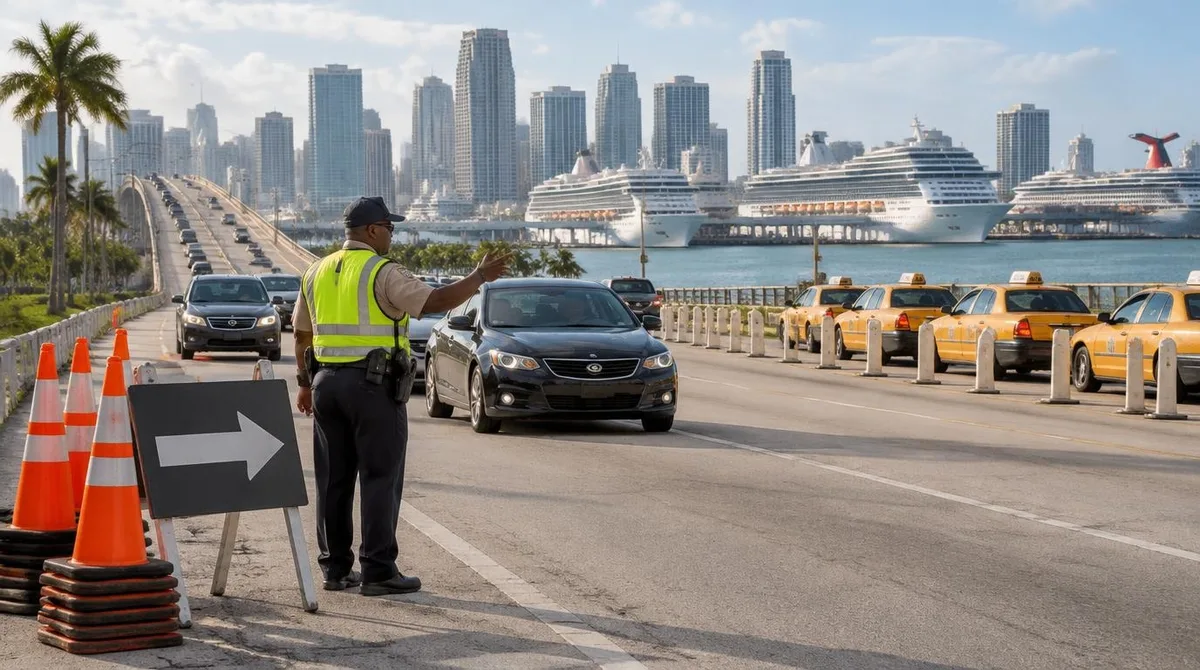
Miami-Dade County has rolled out a traffic plan for PortMiami ahead of a cruise season that will bring millions of passengers through the world's busiest cruise port. The county counts 81 high-traffic days in the 2026-27 season, each with seven to 10 ships and as many as 80,000 combined passengers. The steps matter most for the residents, businesses and commuters who use the roads around the port every day, not just for travelers.
Mayor Daniella Levine Cava announced the effort in a statement published by Miami's Community Newspapers. "Traffic congestion around PortMiami affects more than cruise passengers," she said. "We recognize those challenges and are taking additional steps to improve traffic flow, particularly during the busiest days of the cruise season." She convened PortMiami leadership with transportation and public safety partners after concerns about congestion.
The core of the plan splits port traffic in two. Travelers headed to Terminals AA through D will be directed through the PortMiami Tunnel. Those bound for Terminals E through V will use the PortMiami Bridge. Designated staging areas for taxicabs, rideshare drivers and passenger motor carriers are meant to cut down on vehicles circling the port while they wait for fares.
Technology carries part of the load. Through a partnership with GridMatrix, PortMiami will use AI-powered computer vision tools to monitor traffic patterns and predict bottlenecks. The county says the data will guide traffic decisions and improve coordination during peak periods. On the street, personnel from PortMiami, the Miami-Dade Sheriff's Office and the City of Miami Police Department will help manage traffic at Biscayne Boulevard and surrounding areas on selected high-traffic dates.
Passengers get homework too. PortMiami is releasing two educational videos, "Arrive at Your Embarkation Time" and "Choose the Right Entrance," to help travelers plan arrivals and pick the correct entry point. New and continuing partnerships with cruise lines will also provide complimentary airport shuttle transfers on select dates for select trips, an option the county says should reduce the number of personal vehicles entering the port during peak hours.
The logistics are unusual by any port standard. PortMiami sits on a 520-acre island, which the mayor's statement describes as requiring planning, coordination and the ability to adapt as travel patterns change. "A thriving port should never come at the expense of a thriving city," Levine Cava said in the statement.
For locals, the practical takeaway is timing. Congestion around the port peaks on the 81 high-traffic days, when seven to 10 ships turn over tens of thousands of passengers at once. Drivers and commuters who can shift errands away from Biscayne Boulevard and the port approaches on those dates will feel the difference most. Cruise passengers, meanwhile, have a direct role: arrive at the embarkation time printed on their booking and use the entrance assigned to their terminal. This connects to our earlier piece, Ultra 2026 Drew 165,000 to Downtown Miami's Bayfront Park Over Three Days.
The port's traffic season runs alongside the county's packed events calendar, from Miami Festivals Worth Planning Your Year Around to waterfront weekends downtown. Travelers combining a cruise with time in the city can find more in our events coverage, and neighborhood-level updates in our Miami News section.