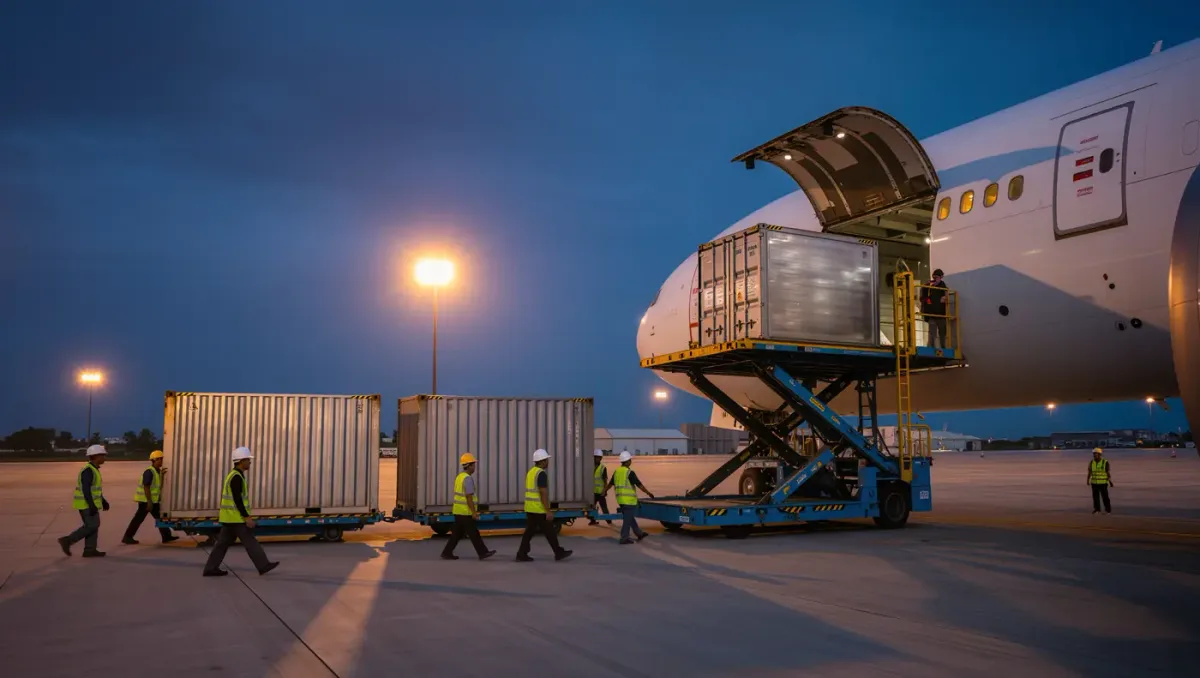
Miami International Airport handled nearly 3.5 million tons of international freight in 2025, a 13.6 percent jump and the facility's sixth consecutive record cargo year, per the airport's announcement in early 2026. Passenger traffic reached 55.3 million travelers in 2025, clearing the 55-million mark for the second straight year and finishing about 1 percent below the all-time record of nearly 56 million set in 2024.
The cargo number is the story with deeper local roots. MIA is the Western Hemisphere's leading gateway for international air freight, and its cargo expansion runs on Latin American perishables, pharmaceuticals, and e-commerce moving through Miami-Dade's airport-district warehouses — the distribution economy around NW 36th Street and the communities of Fontainebleau Park, Doral's eastern edge, and Medley that employ thousands in freight handling, customs brokerage, and trucking. A sixth straight record year, per the airport, extends the growth streak that began with the post-pandemic air-freight surge and has held even as global rates cooled.
Passenger volume tells a steadier story: 55.3 million travelers in 2025 against the 2024 record of nearly 56 million, per the airport's figures. The airport's operator, the Miami-Dade Aviation Department, has paired the traffic reports with a long-running modernization program — gate expansion, terminal work, and technology upgrades intended to push capacity above 60 million annual passengers in the coming decade.
Why it matters here: MIA is Miami-Dade's largest single economic engine by most county estimates, and both records land on the same neighborhoods — the hotel corridors of Miami Springs and the airport-west industrial districts, the cargo-truck routes through Hialeah Gardens, and the county payroll that the Aviation Department carries. The cargo side of the ledger explains why the streak persists where other hubs have flattened. MIA sits at the front door of Latin American trade, and the goods that move through its freighters — cut flowers, fish and produce, pharmaceuticals, e-commerce parcels — depend on the airport's customs capacity, cold-chain warehouses, and truck connections to the county's distribution districts. Cargo and passenger operations also compete for the same runways and real estate, which is why the Aviation Department ties each traffic report to its capital program: the modernization plan is designed to let both sides of the ledger grow without crowding the other out. For the county's freight-adjacent neighborhoods, the distinction matters less than the total; a ramp crew in the airport district or a broker's office in Doral sees one economy.
The airport's calendar-2025 results, announced ahead of the summer travel peak, set the baseline for whether 2026 delivers a seventh cargo record and a new passenger high.