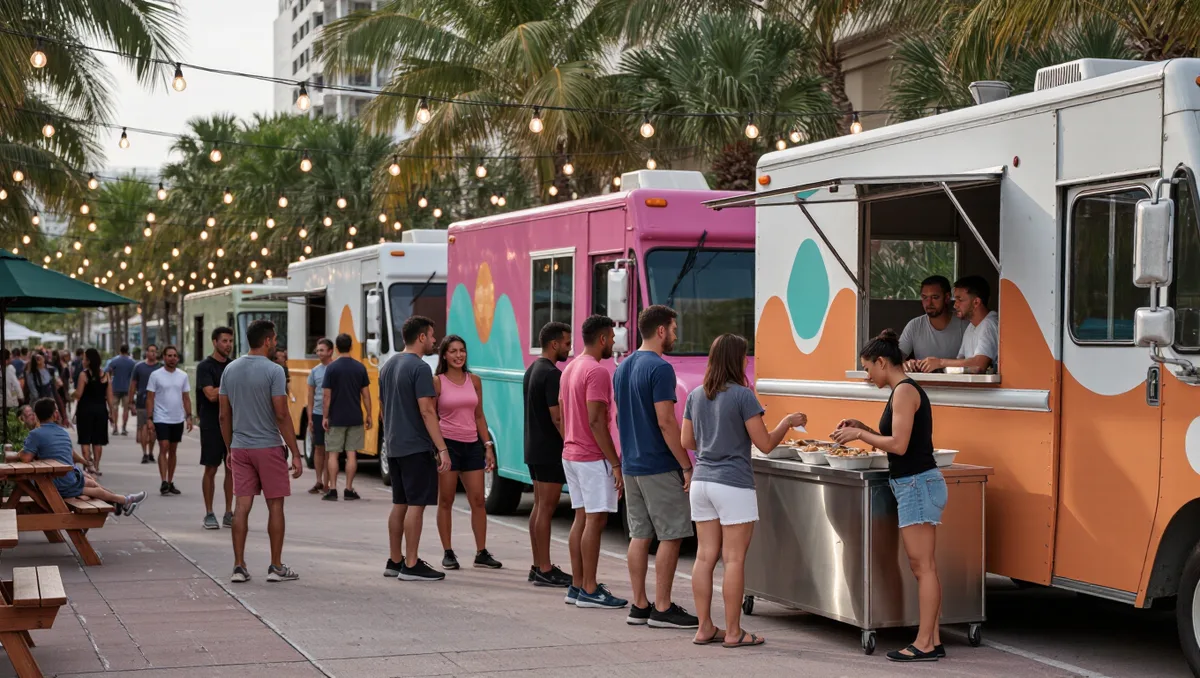
A food truck in Miami is a restaurant on wheels, and it costs like one. The truck itself, the kitchen inside it, the licensed facility that supplies it, and the permits from the City of Miami and Miami-Dade County all come due before the first customer pays. The payoff comes from picking the right corners, the right hours, and the right season.
This guide explains how the Miami food truck business works: what a new owner has to line up, where the steady money actually shows up, and why the calendar matters as much as the location. Anyone weighing the leap should read it alongside the publication's broader How to Start a Small Business in Miami: The Real Checklist, which covers the ground-level steps every Miami business faces.
What does it cost to get a truck rolling?
The biggest line item is the rig itself. Owners either buy a truck outright, finance one, or lease, and each route trades a large upfront payment for a monthly obligation. The kitchen build-out inside — fryers, griddles, refrigeration, ventilation, and a generator or shore power — usually rivals the cost of the vehicle, because health code standards for mobile food units are close to those for a fixed kitchen.
Then come the recurring costs that surprise new operators. A licensed commissary — a commercial kitchen where the truck stores food, fills water tanks, and dumps waste — is required in Florida, and operators pay for that facility every month. Insurance, fuel, propane, and routine maintenance on a vehicle that runs daily add up fast. City and county permits and the local business tax receipt renew on their own cycles; the publication's guide to getting and renewing a Local Business Tax Receipt walks through that paperwork.
None of these figures is fixed, and anyone budgeting should get current quotes rather than rely on a generic online number. What is fixed is the shape of the cost structure: a food truck carries most of the overhead of a brick-and-mortar restaurant, minus the rent, plus the wheels.
Where are the profitable corners in Miami?
Profit in the truck business rarely comes from a single magic spot. It comes from matching the menu and the hours to a predictable crowd. Downtown office lunch lines, construction sites with a hungry crew, brewery patios that invite trucks in the evening, and festival grounds each support a different kind of menu and a different kind of day.
The reliable corners share three traits: foot traffic that shows up on schedule, permission to park and serve, and low competition on the day and hour the truck is there. Private lots change that math — a property owner can invite a truck and charge a fee or a percentage, which trades certainty for cost. Public streets follow posted rules, and those rules differ by municipality across Miami-Dade, so operators confirm them with each city before committing to a route.
Event catering is the other profitable corner. A booked private event pays a known amount for a known date, which steadies the weekly cash flow that street service alone rarely provides. Many established Miami trucks treat catering as the base and street service as the variable on top.
How much does Miami's season shape the business?
A great deal. According to Visit Florida, the best time to visit Miami runs from December through May, when the weather is warm and dry — and that stretch is also the peak tourist season. For a food truck, that calendar shows up as thicker crowds at the beachside and event-heavy corridors during those months, and a thinner, more local customer base through the hot, wet summer.
Smart operators plan around it. Some shift routes inland toward office and residential neighborhoods in the slower months. Some schedule maintenance and kitchen overhauls for the summer lull, when a lost selling day costs less. Others lean on events that anchor the calendar, from the Calle Ocho Festival that Visit Florida lists among Miami's popular annual events to the steady run of neighborhood gatherings covered in the publication's events section.
Weather cuts the other way, too. A named storm or a week of heavy rain can erase a month of street revenue with no warning, which is why operators who last treat cash reserves as equipment, not leftovers.
What rules shape where a truck can operate?
Mobile food vending sits under several layers of oversight: the State of Florida's food-safety standards for mobile units, county health inspection of the commissary and the truck, and each municipality's own rules on where a vendor may park and serve. In the City of Miami, the commission sets local ordinances, and the city's official site at miami.gov is the starting point for city-level requirements and notices.
The practical point for a new owner is that the rules are local and they change. A corner that is legal in one municipality may not be legal across the street in another. Operators who build a relationship with their commissary, their inspector, and each city's business desk tend to spend less time off the road. Owners looking for help with licensing, financing, or training can start with the county-level resources described in Miami-Dade Small Business Programs: Where Owners Find Help and Money. For related coverage, see Miami-Dade Small Business Programs: Where Owners Find Help and Money.
What this means for anyone weighing the leap
The truck economy rewards operators who treat it as a logistics business that happens to cook. The winners plan the route like a delivery schedule, the menu around what the kitchen can actually produce in a lunch rush, and the budget around the slow season. The losers usually bought a truck, not a plan.
For readers who want the wider picture of Miami's storefront economy, the publication's business section follows the restaurants and family firms — from El Rey de las Fritas in Little Havana to the markets of Allapattah — that a food truck competes with for the same lunch hour. The evidence here points one way: the profitable corners exist, but they belong to the operators who did the unglamorous math first.