Every late July and early August, Miami-Dade families can pick up free backpacks and school supplies at giveaway events staged across the county — church drives in Liberty City, commissioner-district fairs in Kendall, library supply events in Homestead and city giveaways in North Miami Beach, per the region's annual event listings. The pattern held again in the 2025 season, when events ran from late July into mid-August before Miami-Dade County Public Schools' August start, and the same institutions stage them year after year. This guide explains how the giveaways work, who qualifies, and how to plan a route through the season's events.
When do back-to-school giveaways happen?
The season runs from mid-July to roughly the school year's first day. In the 2025 cycle, events clustered on weekends from late July — a River Cities backpack and resource fair on Saturday, July 26, 2025, 9 a.m. to noon, was typical — through city-run giveaways in mid-August, including North Miami Beach's supply event on Tuesday, August 12, 2025, 5 to 8 p.m. at 17051 NE 19th Avenue, per the city's calendar. Miami-Dade County Public Schools sets the deadline: whatever the event, supplies need to land before the district's first bell in mid-August.
Families planning ahead should assume the rhythm repeats annually: weekend fairs from about July 20, weekday evening city events in early August, and the heaviest concentration in the two weeks before school starts.
Who can receive free supplies?
Most events serve any school-age child, with three conditions that recur across the county's listings. First, the child generally must be present — backpacks are handed to students, not to adults collecting for families, per event organizers' rules. Second, supplies are distributed while they last, and the largest events' backpacks can be gone within the first hour, so early arrival is the difference between a full and an empty bag. Third, some events target specific neighborhoods or school catchments — a church drive in Liberty City, a district fair in Kendall — and a few larger giveaways ask for proof of residency or school enrollment.
Income restrictions are rarer than families expect: the majority of church, nonprofit and city events serve all comers, on a first-come basis, per the season's published listings.
What gets handed out, and what should families bring?
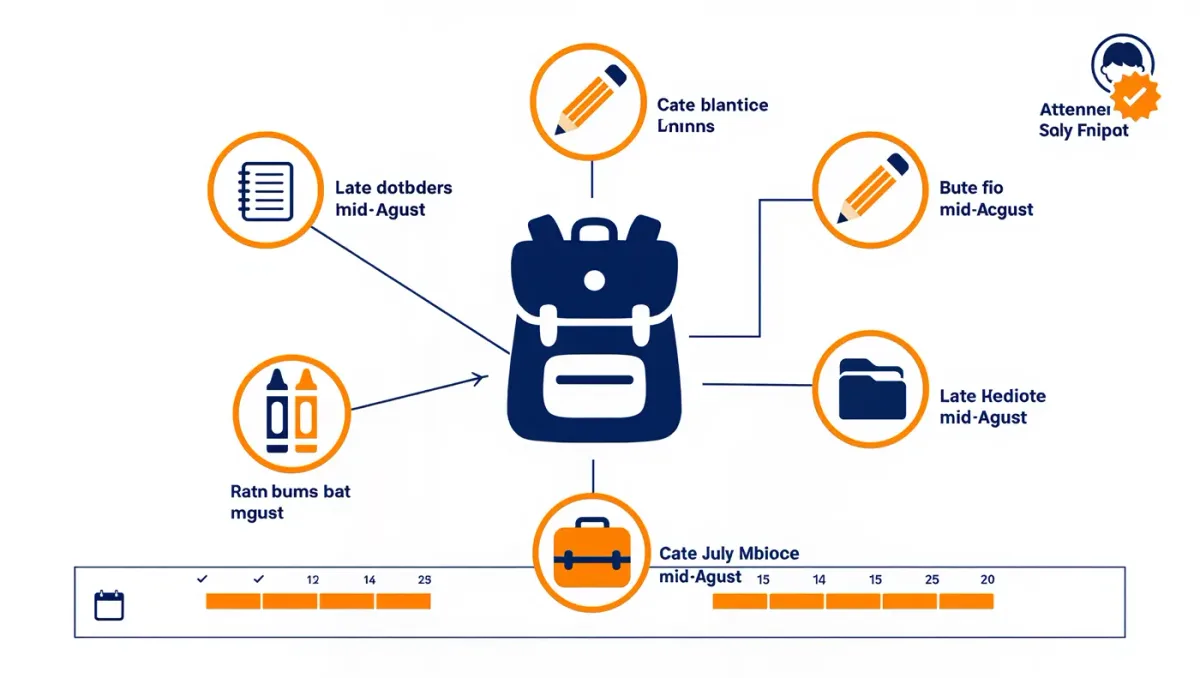
The standard backpack fill covers the district's elementary list: notebooks, pencils, crayons, folders, glue sticks and a lunchbox at the better-stocked events. Some fairs add haircuts, uniforms, physical exam vouchers and bike helmets; resource fairs pair the supplies with tables for library cards, after-school programs and health screenings. Families should bring:
- The child or children receiving the backpack.
- A bag or stroller space for the giveaway itself — supplies come loose as often as packed.
- Water and patience; the largest fairs queue by 8 a.m. for a 9 a.m. open.
- If the event specifies it, an ID or proof of address.
The Miami-Dade Public Library System runs a complementary track: supply drives and family events at branches countywide, listed on the library system's event calendar, which lets families who miss the big fairs pick up basics closer to home, from Homestead to North Dade.
Which institutions run the events?
Four networks cover the map. County commissioners' district offices stage the largest single fairs, often with school-supply giveaways plus health and resource tables. Churches and faith nonprofits run neighborhood drives — the densest coverage in Liberty City, Little Havana, Overtown and Miami Gardens. Cities add their own events, like North Miami Beach's August giveaway, and nonprofits such as the Children's Trust-supported agencies fold supply distribution into family-resource fairs. Finally, the library system's drives and school-based distributions catch families at the branch and schoolhouse level.
Because each organizer sets its own rules, the county's practical advice, repeated in every season's listings, is to check an event's posting for times, requirements and supply counts before setting out. Details are subject to change year to year, and the events that ran on a Saturday in one district last summer may run on a weekday evening in another this one. The families who navigate the season best treat it as a short campaign: list the events, rank them by distance, and commit to the first two weekends.
What mistakes cost families a backpack?
Three recur every season. Arriving at the published start time rather than an hour early, at the largest fairs where lines form long before the open. Sending an adult alone, when the child-present rule sends the family back to the car. And assuming an event from a social-media flyer will honor its posted time — the small church drives shift and cancel with volunteer availability, which is why organizers ask families to confirm through the posting or the sponsoring institution before driving across town. None of the three rules is complicated; all three decide whether the car ride home holds supplies.
How do families find this year's events?
Start with the school calendar, then work outward: the district's first-day date tells families the deadline, commissioner district pages and city calendars list the big fairs, the library system's event listings cover the branches, and neighborhood church signs carry the local drives. Families in the southern end of the county — Homestead, Florida City, Cutler Bay — should note that the southern districts stage their own large fairs rather than expecting families to drive north, and the pattern holds in Miami Gardens and North Miami Beach at the county's other end. No family in Miami-Dade is more than a short bus ride from at least one event in a normal season. Local media roundups aggregate the season's events each July, and community bulletin boards in libraries and parks departments still carry flyers for the small church drives that never make a listing.
The season's arithmetic is the reason it exists: a backpack and supplies can run $50 to $100 per child at retail, and Miami-Dade's public schools enroll more than 330,000 students, per the district's enrollment reporting. The giveaways that fill July and August are the community's scale answer — one backpack, one child at a time, across a county.