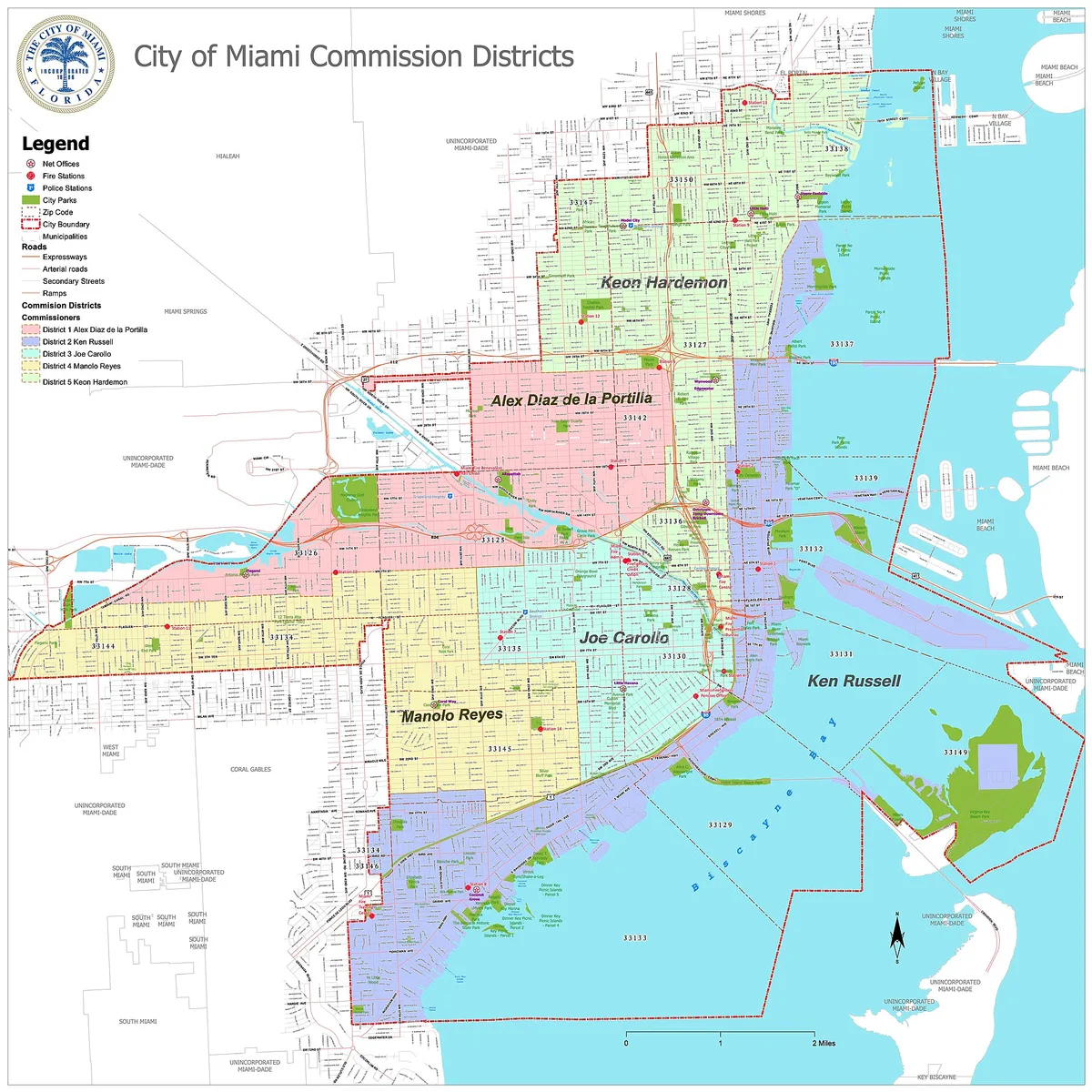
To join a neighborhood association in Miami, find the group covering your blocks, attend a meeting, and pay its membership dues — often $10 to $40 a year. The civic paperwork runs in parallel: the City of Miami asks neighborhood and homeowner associations to register with the city, and Miami-Dade County has required condominium, cooperative and homeowner associations to register annually with the Department of Regulatory and Economic Resources since January 2023, per both governments' official pages. This guide walks through the process block by block, from Coconut Grove to Kendall, Hialeah to Homestead.
What does a neighborhood association actually do?
A neighborhood association is a volunteer group of residents, often a few dozen households, that organizes around local conditions: zoning changes, crime-prevention meetings, park cleanups, traffic petitions, festival planning. It is not the same as a condominium board or a mandatory homeowners association, which can levy assessments and enforce covenants. A voluntary neighborhood association usually cannot fine anyone; its power is organized attention, delivered in public comment at commission meetings and in direct communication with district offices.
In practice the groups handle the texture of street life — the broken streetlight list for a NET office, the swing-set vote at a park, the candidate forum before an election. In Miami's dense older districts, from Little Havana to Wynwood and Allapattah, associations also serve as the recognized interlocutors when developers present projects to the community.
How do you find the association for your block?
Three routes, in order of reliability:
- City and county registries. The City of Miami maintains a registration page for neighborhood and homeowners associations, and Miami-Dade County runs a public registry search where registered associations' contact officers appear. Look up your address and scan for the group whose boundaries include it.
- Your district office. City and county commissioners' offices keep lists of active associations in their districts and will tell residents which one covers their street — the county even publishes homeowner-association lists by commission district.
- The street itself. Signs at park entrances, flyers at libraries and posts in neighborhood social-media groups usually name the association and its meeting night.
In Miami Beach, the city publishes its own neighborhood association directory; in North Miami, Hialeah and Homestead, the city clerks' offices and parks departments perform the same referral function.
What does joining require?
Most associations in Miami-Dade welcome any resident — renter or owner — within their boundaries, and several of the county's longest-running groups, from Shenandoah to Miami Shores Village civic circles, began with exactly such a walk-in. The mechanics are simple: attend a general meeting, which for many groups is monthly, introduce yourself, and pay the annual dues. Some associations ask new members to sign a one-page form with name, address and email so meeting notices can be sent. Meetings typically run 60 to 90 minutes at a community center, school cafeteria or church hall.
Expect the first meeting to be administrative — minutes, treasurer's report, a guest speaker from the police station or the district office. The real integration happens after: the WhatsApp thread, the cleanup crew roster, the committee that plans the block's annual picnic.
What if your street has no association?
Start one. The City of Miami's registration page lists what a new association needs to file: the association's name, the names and titles of its president or chairperson, board members and officers, and a mailing address, phone number and email. Roughly a dozen engaged households, a set of bylaws of a page or two, and a meeting rhythm are enough to function. County residents outside city limits follow the same pattern and can take the county's free Miami-Dade Civics Academy classes, which train residents on how local government actually operates.
Two cautions from long-serving association officers apply everywhere. First, an association speaks with more weight when it speaks officially — motions passed at documented meetings, letters on letterhead — so keep minutes from the start. Second, registration with a city or the county is an administrative act; it does not certify that a group represents everyone on the block, and residents should attend a meeting before assuming any single group speaks for their street.
What should a new member expect at the first few meetings?
The rhythm of an association year is fairly predictable across Miami's neighborhoods. Fall brings budget-season preparation, when city and county budgets are drafted and associations submit funding and service requests. Winter carries the elections cycle — candidate forums and get-out-the-vote logistics. Spring fills with development presentations, when builders seeking approvals present to the groups a project touches. Summer thins the calendar but carries the social events that hold a group together between fights. New members who arrive in the quieter stretch should ask for the minutes of the last three meetings; they read faster than any orientation and show exactly what the group spends its capital on.
How much time does membership take?
As little as one evening a month. Officers and committee chairs carry heavier loads — a president of an active association might spend a few hours weekly on notices, development presentations and liaison calls. Dues money typically covers meeting refreshments, newsletter printing, cleanup supplies and occasional event costs; associations are not fundraising machines, and treasurers' reports at most Miami groups run to a few hundred dollars of annual flow.
The county's annual registration requirement for HOAs and condominium associations — due February 1 each year, online only, per Miami-Dade's registry page — applies to mandatory associations, not voluntary neighborhood groups, but voluntary groups benefit from knowing which registered associations operate nearby.
Why bother?
Miami's decisions about zoning, parks, traffic calming and policing are made in public meetings where turnout counts. A commissioner's aide can tell within minutes whether a room holds two concerned residents or the officers of a registered association speaking for 200 households. The neighborhood association remains the most reliable machine for turning street-level concern into that second scene — and joining one costs an evening, a form and the price of a pizza.