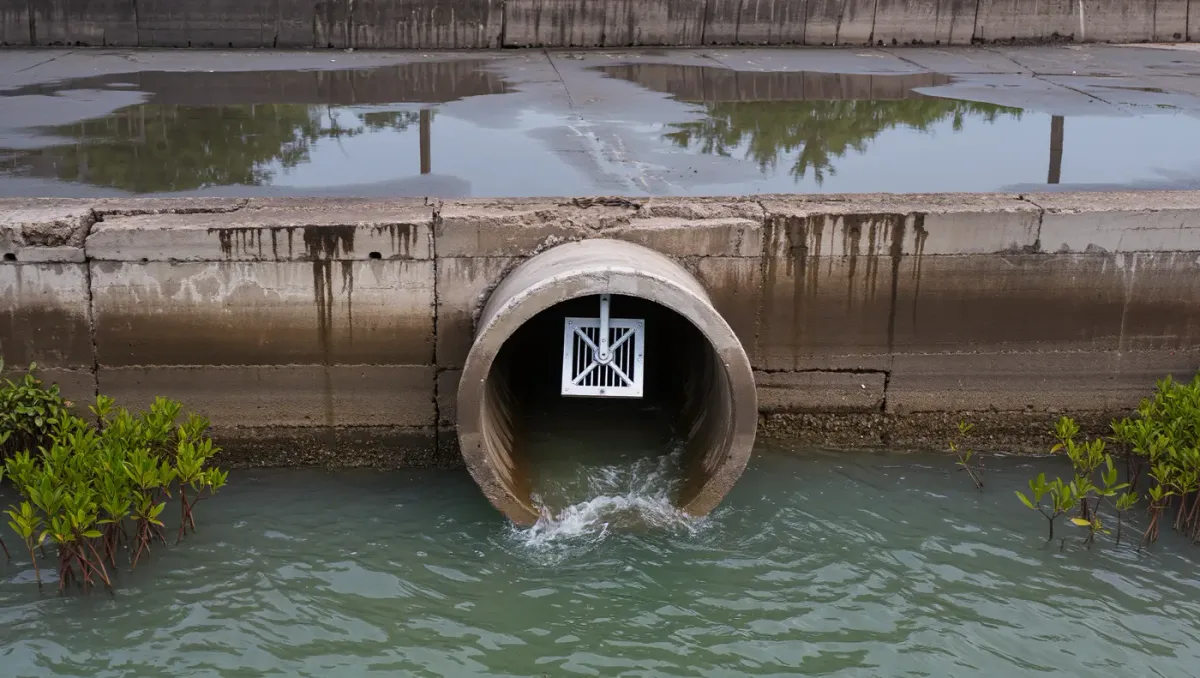
The City of Miami has installed 47 of the 50 one-way tidal backflow valves planned under a Miami Forever Bond flood-mitigation program, with the final three scheduled for January, per the city's Office of Capital Improvements. The program, budgeted at $2.5 million in bond money and supplemented with state funding, targets the drainage outfalls where Biscayne Bay's rising tides back up into city streets during king tides and heavy rains.
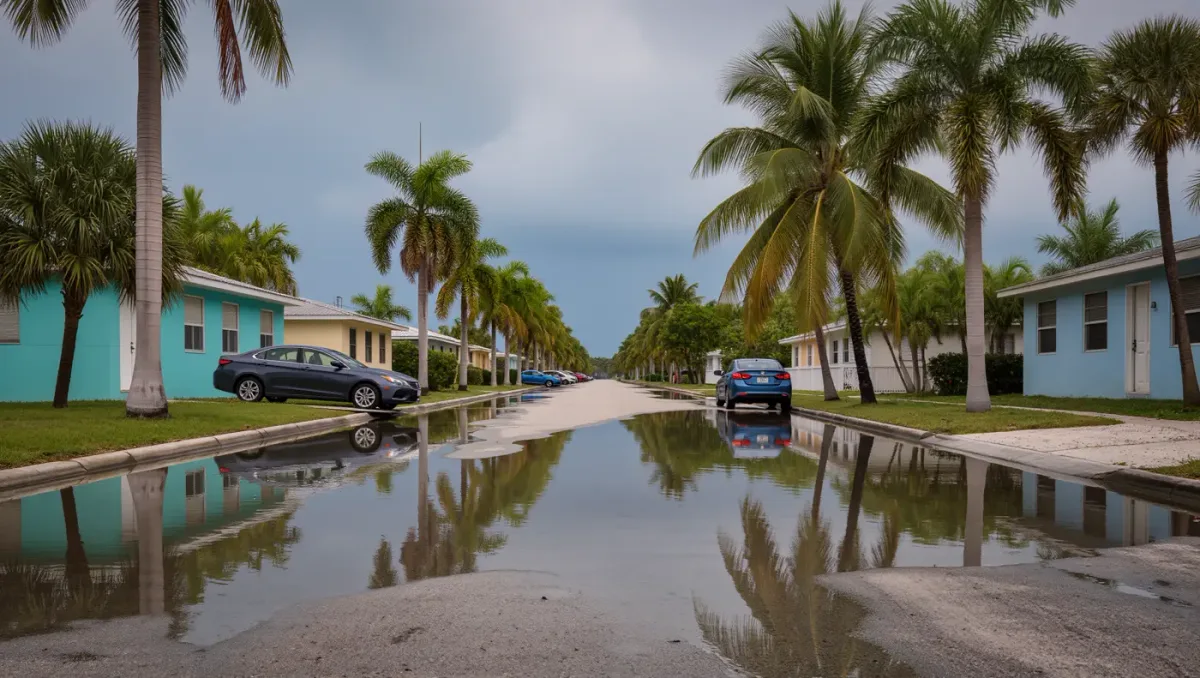
The valves work in the least glamorous way possible: they let stormwater drain from Miami's streets into the bay at low tide, then slam shut when the tide turns, so seawater cannot push back up through the pipes and flood the pavement from below. That reverse-flow flooding is the signature Miami problem, the pooled seawater that appears on sunny mornings in low-lying blocks near the bay even when no rain has fallen, per the city's project descriptions.
Why it matters here: the outfalls served by the program sit behind some of the city's most flood-prone bayshore neighborhoods, from the low blocks of the Upper East Side's Morningside and Shorecrest edges to stretches of Coconut Grove and downtown, where residents track king-tide forecasts the way northerners track snowstorms. Each installed valve is a modest piece of brass and engineering, but together they decide whether king-tide mornings close streets, soak cars, and send salt water into ground-floor apartments. The program also answers, in concrete, a question hanging over the $400 million Miami Forever Bond that voters approved in 2017: whether the $192 million earmarked for sea-level rise and flood prevention converts to visible street-level protection, a question local reporting revisited in December 2025 as the bond passed its eighth year.
The valves are one layer of a larger drainage strategy rather than a cure. The city's stormwater master plan contemplates retrofitting roughly 50 additional outfalls to accept the same one-way gates, per the capital improvements office's project listings, and the work complements the larger, costlier pump and drainage projects the bond has funded since its first groundbreaking in 2018. Engineers describe the valves as the cheapest protection per dollar against tidal backflow, which is why the program moved ahead of heavier construction.
City officials are already preparing the next chapter: a bond referendum and special election is scheduled for November 3, 2026, per the city's capital improvements notices, which would put further resilience spending before Miami voters. Project details remain subject to change, per the office.