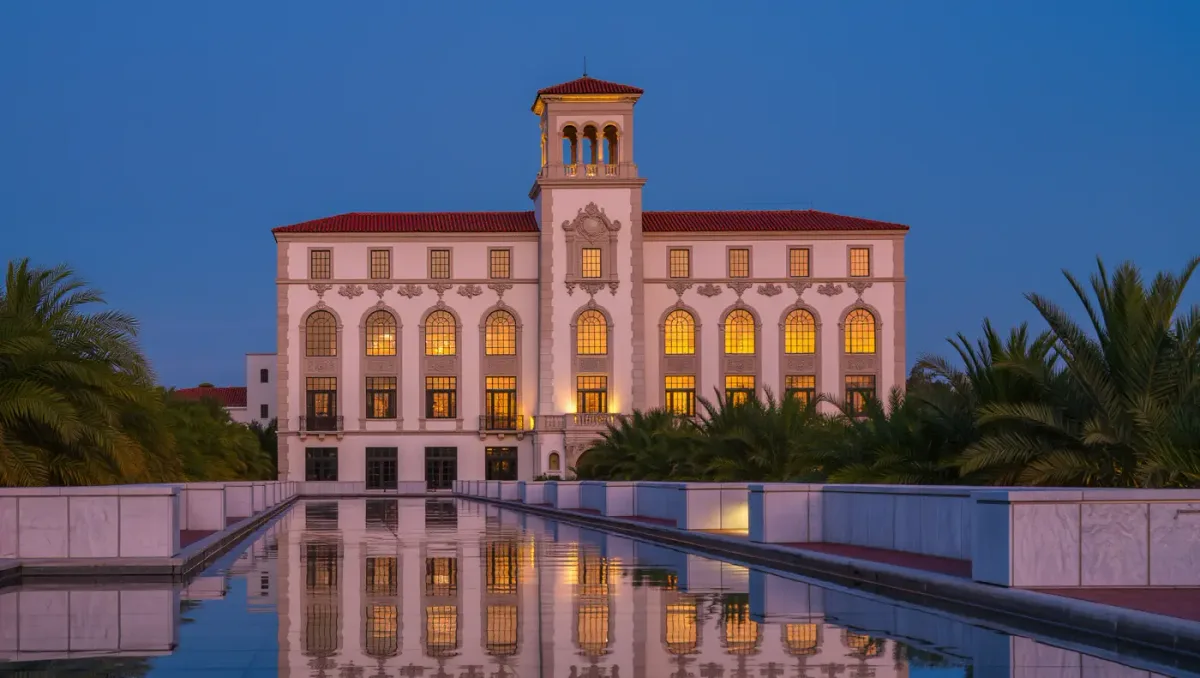
The Freedom Tower, the 1925 landmark at 600 Biscayne Boulevard in downtown Miami, reopened to the public on September 16, 2025, after a two-year restoration that Miami Dade College, the tower's owner, put at roughly $25 million. The ribbon cutting fell in the building's centennial year, a hundred years after the Mediterranean Revival tower first opened as home of The Miami News, and the college is running the restored floors as a museum open Wednesday through Sunday from 10 a.m. to 6 p.m.
The project repaired a structure that had spent decades absorbing salt air and hurricane seasons. Crews preserved the lobby much as earlier generations knew it, per the college's restoration announcements, and installed four new exhibitions across the building. The tower carries the heaviest of the exhibits' subjects: in the 1960s it served as the Cuban Refugee Assistance Center, the processing and aid office hundreds of thousands of Cuban exiles passed through, which gave the building its name and its place in the city's civic memory.
The college positions the tower as a teaching site as well as a museum, with student programming listed alongside public exhibitions in its 2026 calendar.
Why it matters here: the tower anchors the downtown Biscayne Boulevard corridor between the AmericanAirlines Arena district and the Omni neighborhood, and its reopening restores a civic gathering place to a stretch of the boulevard that has filled with condominium towers over two decades. For the Cuban American families whose Miami story began in its lines, and for the students of Miami Dade College whose Wolfson campus sits blocks away, the reopening returns an institution rather than an attraction, a building that documents why the city looks the way it does.The building's biography explains the attention it commands. Completed in 1925 as the headquarters and printing plant of The Miami News, the tower later passed through government hands before Miami Dade College acquired it and made it the symbolic front door of the city's Cuban exile story, the assistance center where new arrivals registered for aid from the early 1960s through the mid-1970s. The restoration treated those layers as the point: conservators repaired the exterior while keeping the lobby recognizable to anyone who queued there decades ago, per the college's project descriptions.
The college has scheduled rotating programming in the restored galleries through 2026, per its museum listings, and visitors should confirm hours and admission directly with the museum, as details are subject to change for special events.