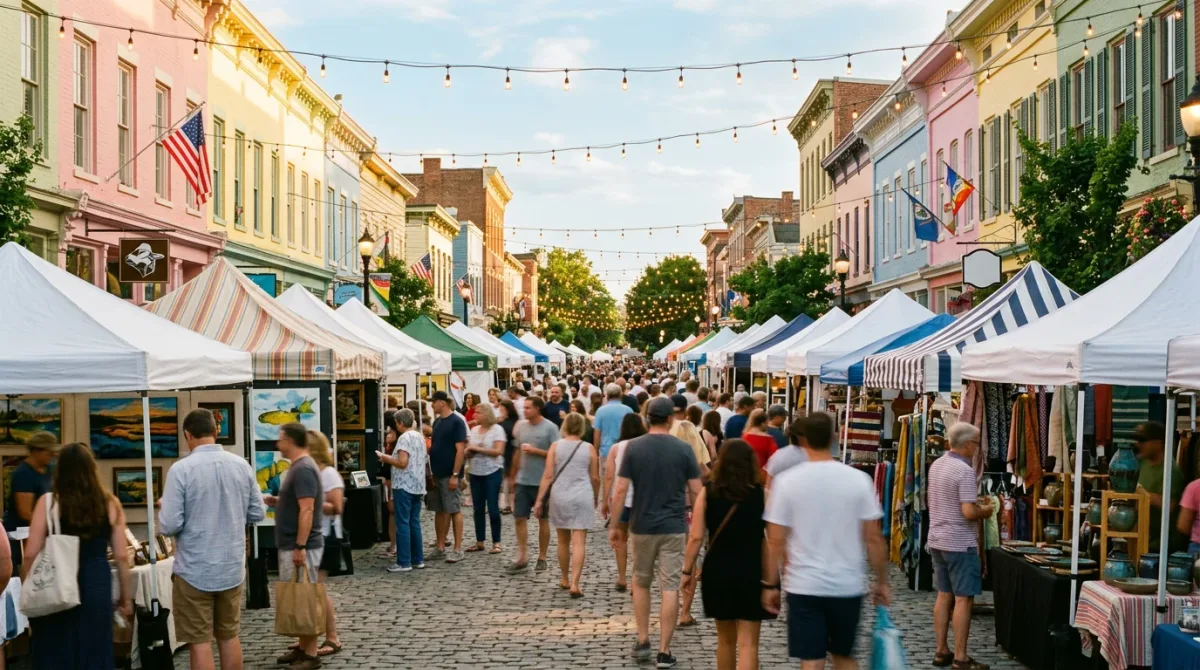
Viernes Culturales, or Cultural Fridays, is a monthly street festival that takes over Calle Ocho — Southwest 8th Street — in Miami's Little Havana neighborhood between 8th and 27th Avenues. Organized by the nonprofit Viernes Culturales, the event runs on the last Friday of each month starting at noon and has continued since its first gathering on May 26, 2000.
What Is Viernes Culturales?
Viernes Culturales is a nonprofit-run arts and culture festival held monthly in Little Havana. The organization behind it says its mission is preserving the history and culture of the neighborhood, one of the nationally recognized Cuban immigrant communities in Miami-Dade County. The festival draws more than 30 local artists and artisans, who set up booths along the closed-off blocks of Calle Ocho, alongside live music and open art galleries that stay open later than usual for the evening crowds. Organizers describe the audience as multicultural, mixing longtime residents with visitors touring the neighborhood for the first time.
The nonprofit also runs the neighborhood's official Welcome Center, based out of the Futurama Galleries building at 1637 SW 8th Street — the same address the organization uses as its office. Futurama itself is a converted art building that the neighborhood's tourism promoters date to 2011, and it now anchors the western end of the festival's footprint on Calle Ocho.
When and Where Does Viernes Culturales Happen?
The festival runs on the last Friday of every month, starting at noon, along Calle Ocho between Southwest 8th Avenue and Southwest 27th Avenue in Little Havana. Viernes Culturales' schedule lists 2026 dates including August 28, September 25, October 30 and November 27. Because street festivals depend on weather and city permitting, organizers recommend checking the schedule close to the date before visiting, and following the group's Facebook and Instagram accounts for same-week updates.
The organization's Welcome Center, at the Futurama Galleries address, keeps its own visitor hours separate from festival days — open daily from 10 a.m. to 4 p.m. — and the group's general office hours run 9 a.m. to 5 p.m. Staff there also distribute a downloadable neighborhood map for visitors planning a self-guided walk of Calle Ocho beyond festival nights.
What Happens Along Calle Ocho During the Festival?
Beyond the artist booths, the monthly event includes a free walking tour of Little Havana led by historian Dr. Paul George, which starts at 7 p.m. on festival nights, according to the organization. The tour pairs the art market with guided context on the neighborhood's Cuban immigrant history, walking participants past storefronts and landmarks that don't otherwise get a formal introduction. Viernes Culturales describes the event as family-friendly, with programming that runs from the noon opening into the evening hours.
Artists and artisans who want a booth on Calle Ocho apply directly through the organization rather than through the city, and the group maintains a separate email address for vendor inquiries apart from its general contact line. That structure — a single nonprofit managing both the festival's vendor roster and its Welcome Center — is what keeps the monthly footprint consistent from one Friday to the next, even as the specific lineup of artists changes.
Who Organizes and Supports the Event?
Viernes Culturales is a 501(c)(3) nonprofit that has run the festival since its first gathering on May 26, 2000, when the organization estimates roughly 2,000 people attended. The group says it works with the City of Miami, the Latin Chamber of Commerce and the Little Havana Development Authority to keep the monthly event running a quarter-century later. General inquiries, including questions about the Welcome Center or the walking tour, go through the nonprofit's office on SW 8th Street rather than a city department.
What Else Is Along the Calle Ocho Corridor?
Calle Ocho is lined with the businesses and landmarks that give Little Havana its identity between festival dates. The corridor is described by Miami's official tourism site as a stretch of Latin-inspired restaurants, bakeries, cigar shops and art galleries, dotted with ventanitas — walk-up windows serving cafecito, pastelitos and Cuban sandwiches. Maximo Gomez Park, known locally as Domino Park, draws residents for daily domino games, and Versailles Restaurant has served Cuban cuisine on the strip since 1971, according to the same tourism site. The corridor also includes the Cubaocho Museum and Performing Arts Center, the Azucar Ice Cream Company, and murals depicting Cuban cultural figures such as José Martí and Celia Cruz.
The Tower Theater, a Miami Dade College-operated venue on Calle Ocho dating to 1926 according to the tourism site, has been closed for a renovation the college's own site lists as "coming soon" without a confirmed reopening date — a detail worth checking before building a visit around it. Some of the corridor's older storefronts were built in rusticated concrete block, a style the City of Miami's historic preservation office notes was common in the area before 1920 and remains visible today. Calle Ocho is also the site of the separate Calle Ocho Music Festival each March, part of the larger Carnaval Miami celebration — a single-day event distinct from the monthly Viernes Culturales gatherings, and not to be confused with it when checking dates.
How Can Visitors Plan Around the Festival?
Because Viernes Culturales runs on a fixed monthly rhythm rather than a single annual date, the corridor rewards two kinds of visits: the last Friday of the month, when the street closes and the artist booths go up, and any other day, when the same stretch of Calle Ocho is still walkable at a slower pace. Visitors planning the second kind of trip can start at the Welcome Center on SW 8th Street, where staff hand out the neighborhood map during the same 10 a.m. to 4 p.m. hours the center keeps year-round.
For festival nights specifically, the organization's own schedule remains the most current word on whether a given Friday is on or, in the rare case of a scheduling change, moved — organizers point visitors there and to the group's social media rather than relying on secondhand listings.
For a related miami news perspective, read How Little Havana's Viernes Culturales Turns Calle Ocho Into a Monthly Festival.