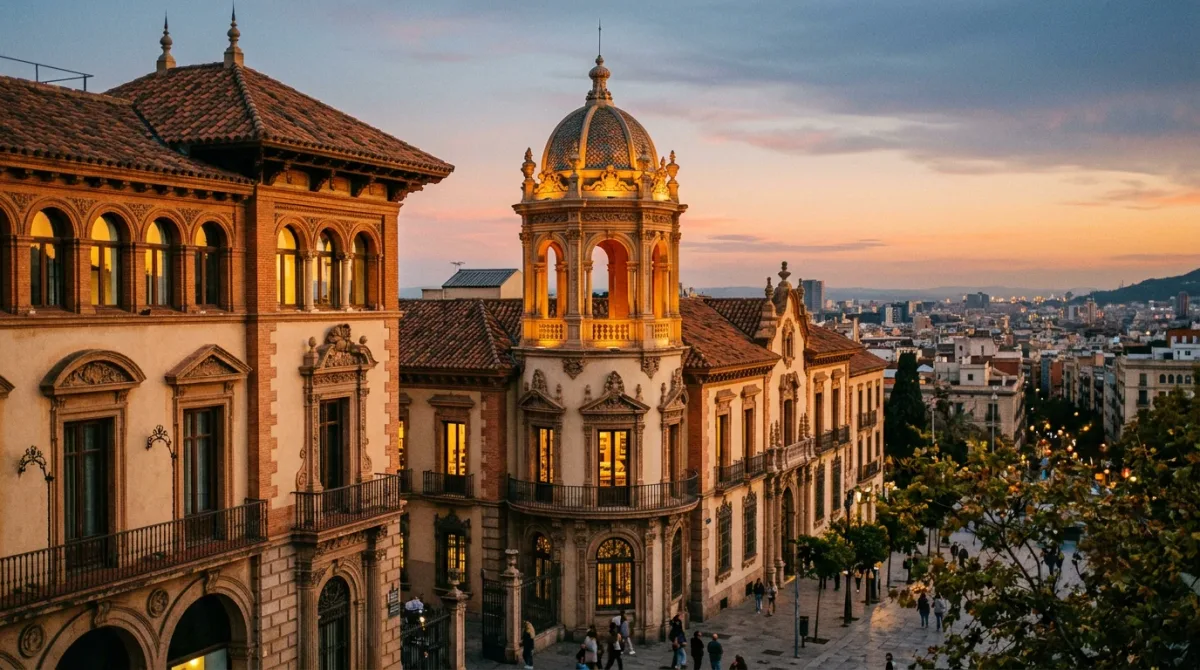
The Freedom Tower, the 1925 skyscraper at 600 Biscayne Boulevard in downtown Miami that once processed hundreds of thousands of Cuban refugees, reopened to the public on Sept. 16, 2025, after a $25 million restoration led by Miami Dade College, which now runs the building as a museum.
Where Is the Freedom Tower and What Is It Today?
The Freedom Tower stands at 600 Biscayne Boulevard, on the edge of downtown Miami near Bayfront Park. Miami Dade College owns the building and operates it as the home of its Museum of Art and Design (MOAD) and the Kislak Center, which together fill the restored tower with four exhibitions exploring the building’s history and Miami’s Cuban community.
The building opened in 1925 as the headquarters and printing plant of the Miami Daily News, and Miami Dade College describes it as one of Miami’s first skyscrapers. That original role ended decades before the tower took on the identity most Miamians know it by today, and the newspaper years now register mainly as a footnote to the building’s later history as a processing center and, later still, as a museum.
Miami Dade College markets the site today as a downtown cultural destination rather than a standalone historic curiosity, pairing the building’s Cuban Refugee Center history with contemporary art and design programming under the same roof. That combination — a federally run refugee processing site turned art museum — is part of what the college points to when it describes the tower as one of the region’s more unusual civic landmarks.
How Did the Freedom Tower Get Its Name?
The federal government used the building as the Cuban Refugee Center from 1962 to 1974, according to Miami Dade College, processing and documenting hundreds of thousands of Cubans who arrived after the 1959 revolution and providing them with medical and dental services. That work is why Miamians began calling it the Freedom Tower, a name the building has carried ever since.
Community leaders later rescued the deteriorating tower and donated it to Miami Dade College in 2005, according to the college, giving the institution stewardship of a building whose history is tied directly to Miami’s Cuban exile community. The college has continued to invoke that history in how it describes the building, framing the Cuban Refugee Center years as the reason the tower carries its current name rather than any reference to its earlier decades as a newspaper headquarters.
Why Is the Freedom Tower a National Historic Landmark?
The Freedom Tower received National Historic Landmark status in 2008 for its role sheltering and processing Cubans who fled the island after the 1959 revolution, Miami Dade College says. That federal designation sits above the building’s architecture or its newspaper origins as the primary reason for its protected status — it is explicitly tied to the refugee-processing history rather than to the tower as a piece of 1920s commercial construction.
The designation is part of why the tower remains a gathering point for the community it once served, including as a site for solidarity rallies during periods of unrest in Cuba. Miami Dade College’s press archive documents that a 2021 restoration announcement was itself timed to a wave of anti-government protests on the island, with officials speaking at the tower specifically because of what the building represents to Cuban Miami.
Why Did Miami Dade College Spend $25 Million to Restore the Tower?
Gov. Ron DeSantis announced the $25 million restoration proposal at a press conference held at the Freedom Tower on Nov. 15, 2021, as demonstrators in Cuba faced a government crackdown on planned protests, according to a Miami Dade College press archive documenting the announcement. The funding, later drawn from the governor’s office along with grants from the National Endowment for the Humanities, the National Trust for Historic Preservation and the Florida Department of State, paid for waterproofing and shoring the parking garage, restoring the historic architecture, installing a new security system and adding accessibility improvements for people with disabilities.
Miami Dade College President Madeline Pumariega tied the timeline to the tower’s 100th anniversary, saying at the 2021 announcement that “the Freedom Tower will be 100 years old in 2025” and that the college wanted it “open to the public, not full of scaffolding and unable to show the history of Cuba here,” according to the college’s press archive. The project was expected to take two to three years, and the building reopened for its centennial in September 2025.
Gov. DeSantis, for his part, framed the restoration less around the building’s architecture than around what it still represents to Cuban exiles and their descendants, saying at the same 2021 announcement, “We should all, as free people, want to see the day when we have a free Cuba,” according to the college’s press archive. That framing — a state-funded restoration explicitly tied to ongoing political events in Cuba — set the tower apart from a typical historic-building rehabilitation project even before construction crews arrived.
What Can Visitors See Inside the Freedom Tower Now?
The reopened Freedom Tower houses Miami Dade College’s Museum of Art and Design and the Kislak Center, with four exhibitions built around the tower’s history, according to the college. The college also runs regular public programming out of the building, including a recurring “Second Saturdays” event series, workshops and other cultural programs tied to the site.
How Can Visitors Plan a Trip to the Freedom Tower?
The Freedom Tower is located at 600 Biscayne Boulevard, Miami, FL 33132, and can be reached at 305-237-7700 or [email protected], according to the tower’s official visitor information. Miami Dade College offers ticketed exhibitions along with weekly public tours and group tours, and the college publishes accessibility and parking information for visitors. Because ticket prices, tour schedules and hours are set directly by the college and can change, visitors are advised to confirm current details before a visit rather than rely on any single published schedule.
The college has framed the reimagined galleries as an attempt to keep the refugee-processing history visible inside a working museum rather than treating it as a plaque on the outside of the building. One MDC student visitor, quoted in the college’s own visitor materials, said the exhibits made the tower’s past feel immediate: “The photographs and personal accounts make the history feel real, like if the voices of the past are still speaking to us today.”
For a related miami news perspective, read Female Artists Celebrate Womens' History Month at the Art Show in Miami.